Published 21 July 2026 · Buying Guides · 1 min read
How to Choose a Screen for a Conference Room
Conference rooms need to work for the furthest seat and every lighting condition — here's how to plan for both.

Size for the Back of the Room
Unlike a home theatre sized to one seating row, a conference room screen has to remain readable — text, spreadsheets, slide decks — from the furthest seat at the table. Measure that distance first, then use the screen calculator's viewing-distance guidance to work backward to a minimum screen width.
Choose a Mounting Type That Fits the Room's Use
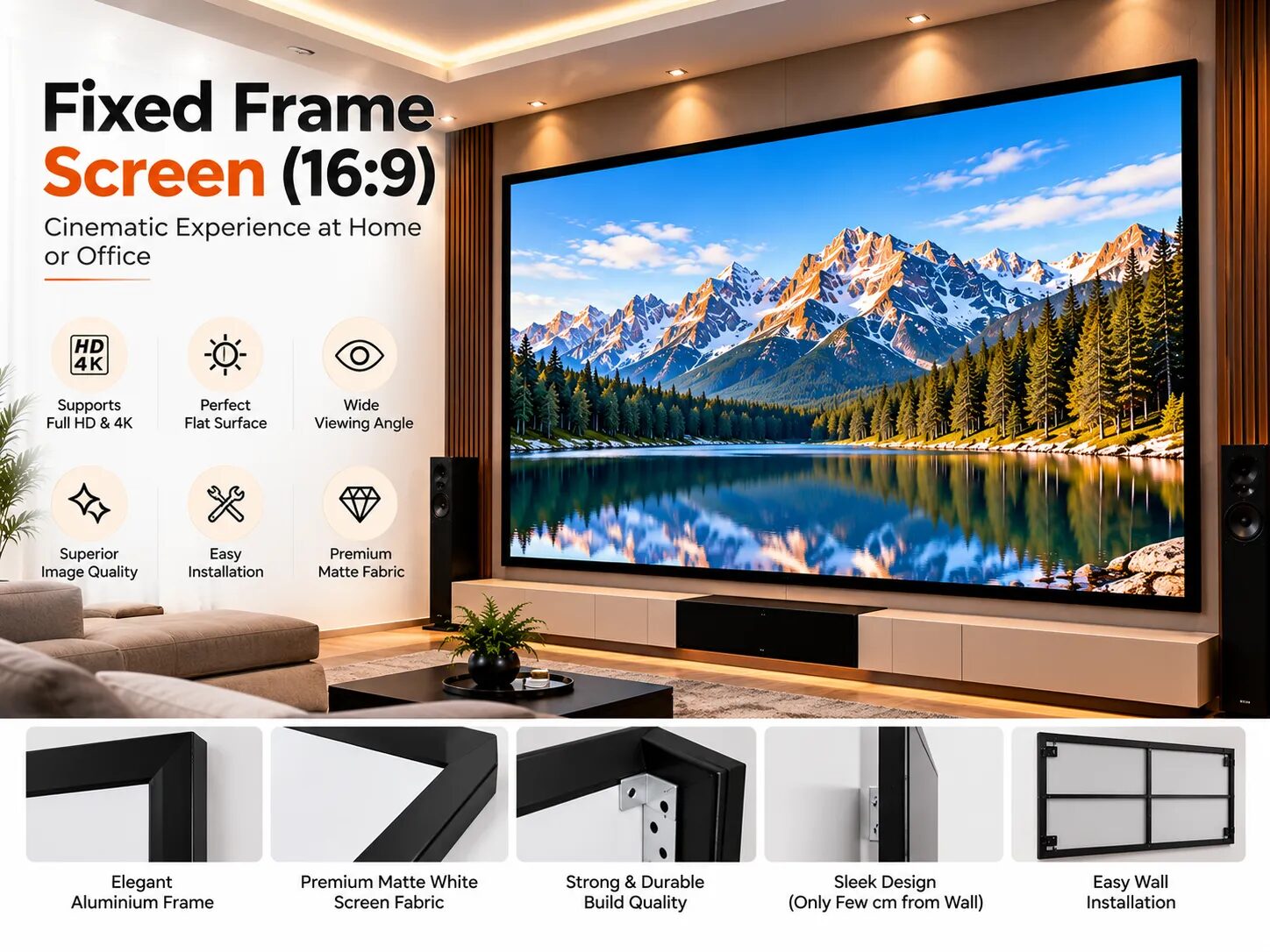
A motorized screen that retracts into the ceiling is the common choice for a dedicated meeting room, keeping the wall clear when not in use. A ceiling mounted or fixed wall screen can work where the room is used for presentations only, and a tripod screen suits a room that's occasionally repurposed for other meetings.
Plan for Daytime Lighting
Conference rooms are rarely darkened during business hours, so an ALR screen is worth considering to keep slides and text legible under normal office lighting — see our ALR guide.
See Related Corporate Setups
For broader recommendations by room type, see our conference room application page and corporate application page.