Published 26 November 2026 · Buying Guides · 10 min read
How to Choose the Right Home Projector Screen for an Immersive Home Theater Experience
Creating a home theater is about more than purchasing a projector and arranging comfortable seating.
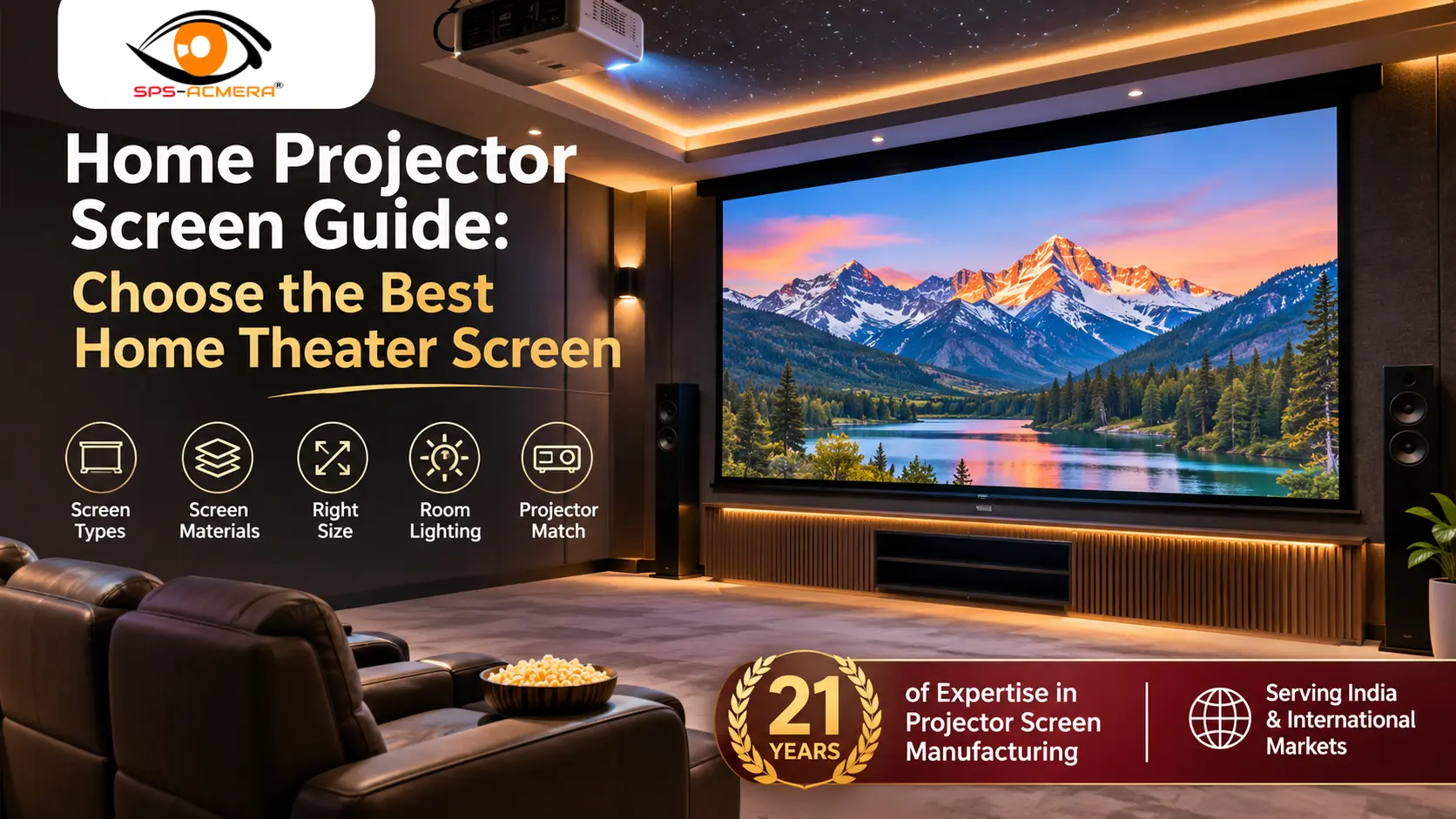
The screen you choose plays an equally important role in determining picture quality, viewing comfort, and the overall cinematic experience. Whether you are designing a dedicated movie room, upgrading your living room entertainment setup, or building a professional home cinema, selecting the right home projector screen can make a significant difference.
Today, homeowners have access to various projector screen options, including fixed-frame screens, motorized screens, manual pull-down screens, and specialized projection surfaces. However, choosing the right option requires understanding your room conditions, projector specifications, screen material, viewing distance, and installation requirements.
With 21 years of experience in the projector screen manufacturing industry, SPS Acmera understands the importance of matching screen technology with real-world viewing requirements. As a projector screen manufacturer serving customers across India and international markets, the brand focuses on helping customers make informed decisions about projection solutions.
In this guide, we will explore everything you need to know before investing in a home theater screen.
1. Why Is a Good Projector Screen Important for Home Theater?
A projector creates the image, but the screen provides the surface on which that image is displayed. Even a capable projector may not deliver its intended viewing performance when paired with an unsuitable projection surface.
A properly selected screen can help improve image consistency, viewing comfort, and the overall presentation of movies, sports, and other entertainment content.
Here are some important reasons to invest in a dedicated projector screen:
Better image presentation: A suitable projection surface helps display images more consistently than many ordinary wall surfaces.
Improved viewing experience: Screen size and aspect ratio can be selected according to the room and seating arrangement.
Professional appearance: A dedicated screen gives a home cinema a cleaner and more organized appearance.
Flexible installation: Different screen designs accommodate living rooms, dedicated theaters, and multipurpose entertainment spaces.
Suitable surface selection: Different materials are available for different lighting conditions and projection requirements.
A good home theater screen should complement the projector rather than simply serve as a display surface.
2. Different Types of Projector Screens for Home Theater
Before selecting a screen, it is important to understand the available designs. Different types of projector screens for home theater installations offer different advantages depending on room layout and usage.
Fixed Frame Projector Screen
A fixed frame screen remains permanently installed on a wall. Its stretched projection surface provides a consistent viewing area and creates a dedicated cinema-style appearance.
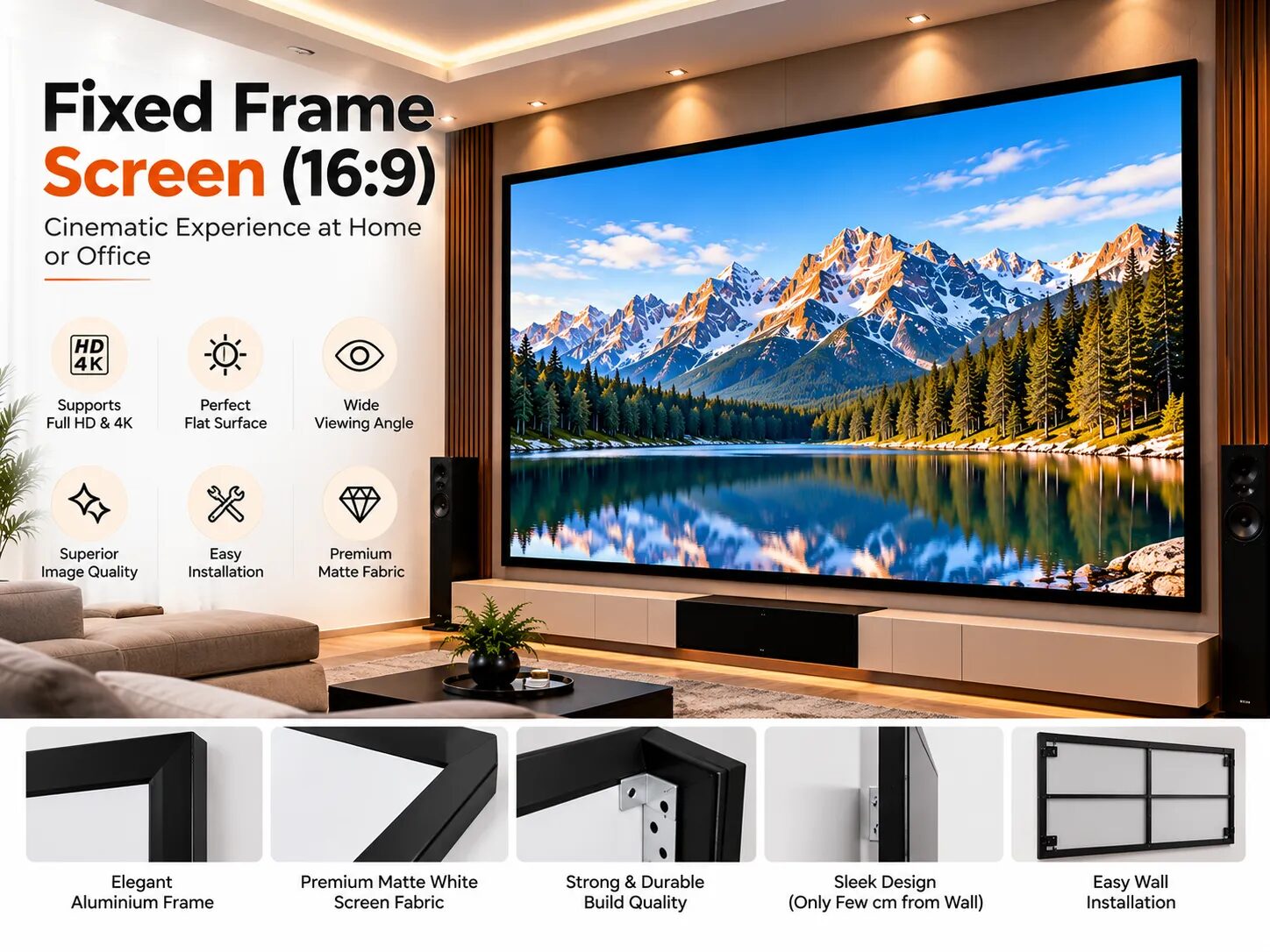
It is particularly suitable for:
Dedicated home theater rooms.
Media rooms with permanent seating arrangements.
Homeowners who regularly watch movies on a large screen.
Motorized Projector Screen
Motorized Projector screens use an electric mechanism to lower and retract the projection surface. They are a practical choice for rooms where the screen needs to be concealed when not in use.
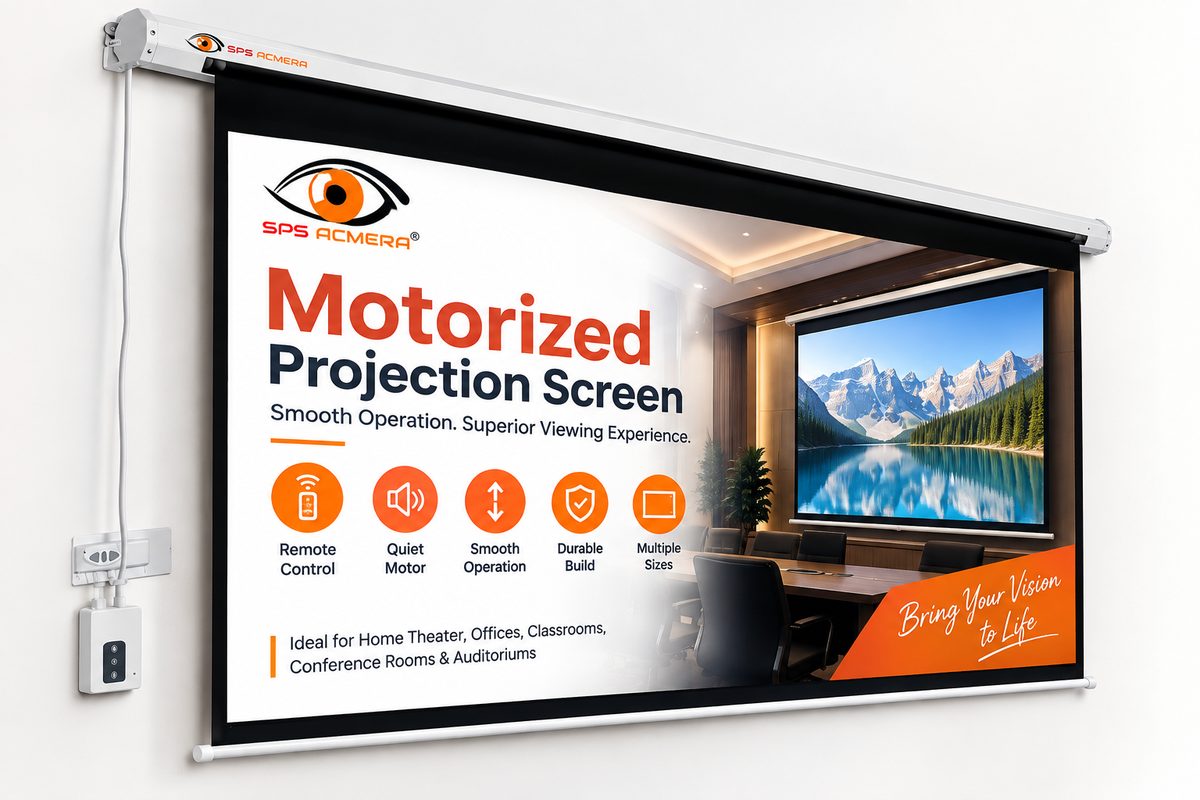
Common applications include living rooms, conference rooms, multipurpose entertainment spaces, and premium residential installations.
Manual Pull-Down Projector Screen
Manual Pull Down screens operate through a simple pull-down mechanism. They offer a straightforward solution for users who want a retractable screen without an electrical operating system.
They can be useful in multipurpose rooms where permanent screen installation is not preferred.
Portable Projector Screen
Portable screens are designed for easy transportation and temporary installations. They are useful for outdoor movie nights, presentations, temporary viewing arrangements, and flexible entertainment setups.
The right design depends on how frequently the screen will be used and whether it needs to remain permanently visible.
3. How to Choose the Best Projector Screen for Home Theater
Choosing the best projector screen for home theater use involves more than comparing prices or screen dimensions. Several technical and practical factors should be evaluated before making a purchase.
Screen Size and Viewing Distance
Screen size should be determined according to the room dimensions, projector placement, seating distance, and viewing preferences.
An oversized screen may feel uncomfortable when viewers sit too close. Similarly, a screen that is too small may not create the immersive experience expected from a home cinema.
Before choosing a size, measure the available wall space and consider the distance between the screen and the primary seating position.
Aspect Ratio
Aspect ratio refers to the relationship between the width and height of a screen.
Common options include:
16:9: A popular choice for movies, television, streaming platforms, and general home entertainment.
2.35:1 or 2.40:1: Suitable for dedicated cinematic installations designed around widescreen movie formats.
4:3: Generally associated with older video formats and certain presentation requirements.
For most modern residential entertainment setups, 16:9 is a practical starting point.
Screen Gain
Screen gain describes how much light a projection surface reflects in comparison with a standard reference surface.
A higher-gain screen may provide greater brightness in a particular viewing direction, but it can also affect viewing angles and brightness uniformity.
A lower-gain or neutral-gain surface may be more appropriate when consistent viewing across multiple seating positions is important.
The ideal choice depends on projector brightness, room lighting, seating arrangements, and screen material.
Ambient Light Conditions
Room lighting has a major influence on perceived image quality.
A dedicated dark home theater provides different conditions from a living room with windows and ceiling lights. Therefore, the screen material should be selected according to the environment.
Consider whether the room will have controlled lighting, natural daylight, or regular ambient illumination before selecting a projection surface.
4. Understanding Home Cinema Screen Materials
The projection surface is one of the most important parts of any home cinema installation. Different screen materials are designed to support different viewing conditions.
When comparing a home cinema screen, consider the following factors:
White Projection Surface: White surfaces are commonly used in controlled-light environments. They can provide a balanced viewing experience when matched with a suitable projector.
Grey Projection Surface: Grey materials can help manage perceived black levels and contrast in certain installations. Their performance depends on projector brightness and room conditions.
Ambient Light Rejecting (ALR) Surfaces: Certain ALR materials are engineered to reject light arriving from specific directions while reflecting projector light toward viewers. They can be useful in rooms where complete lighting control is difficult.
Acoustically Transparent Screens: These screens allow sound to pass through the projection surface, making them suitable for selected home theater designs where speakers are installed behind the screen.
Not every material is suitable for every projector or room. Always evaluate the screen's technical specifications and compatibility before purchasing.
5. How to Select the Right Projector for Your Home Theater
A high-quality screen needs to be paired with a compatible projector. When researching the top projectors for home theater, avoid choosing a model based only on advertised resolution or brightness.
Consider these important specifications:
Resolution: Full HD and 4K projectors are popular options for home entertainment. Choose according to your content and budget.
Brightness: Evaluate the projector's actual brightness specifications in relation to screen size and ambient lighting.
Contrast: Contrast performance influences the difference between bright and dark image areas.
Throw Distance: Check whether the projector can produce your preferred image size from the available installation distance.
Connectivity: HDMI compatibility, streaming support, and other connection options should match your entertainment devices.
Installation Flexibility: Lens shift, zoom, and keystone correction can influence installation convenience. Optical adjustment is generally preferable when available.
The best projector home theater setup is not necessarily the one with the most expensive equipment. It is the combination of projector, screen, room conditions, and installation that meets your specific requirements.
6. Creating the Perfect Movie Room Projector Setup
A dedicated entertainment space requires careful planning. A movie room projector installation should provide comfortable viewing while maintaining a balanced relationship between the screen, projector, seating, and room lighting.
Follow these practical considerations:
Choose the screen wall: Select a wall that offers sufficient space and suitable viewing angles.
Plan projector placement: Confirm throw distance and mounting requirements using the projector manufacturer's specifications.
Arrange seating: Position seats according to screen size and comfortable viewing distance.
Control lighting: Use suitable curtains, blinds, or lighting arrangements to reduce unwanted light.
Consider sound: Plan speaker placement and acoustic treatment to complement the visual experience.
Check cable management: Organize power and signal connections for a clean installation.
These details can significantly improve the usability and appearance of a home cinema.
7. Home Projector Screen vs. Projecting Directly onto a Wall
Some homeowners wonder whether they really need a dedicated screen or whether a plain wall is sufficient.
While projecting onto a wall can be convenient, ordinary painted walls are not specifically engineered for projection. Surface texture, paint finish, unevenness, and wall colour can influence the displayed image.
A dedicated projector screen home cinema solution provides a purpose-designed projection surface with defined specifications.
Here is a simple comparison:
| Feature | Projector Screen | Ordinary Wall |
|---|---|---|
| Projection surface | Designed for projection | Depends on wall finish |
| Image consistency | More controlled | Can vary |
| Screen dimensions | Available in defined sizes | Limited by wall space |
| Installation options | Fixed, motorized, portable, etc. | No dedicated screen mechanism |
| Cinema appearance | Dedicated viewing area | Depends on room design |
For regular home theater use, a suitable dedicated screen is generally the more considered investment.
8. How to Find the Best Home Theater Screen for Your Requirements
The best home theater screen depends on the individual installation rather than a single universally suitable product.
Before making your decision, ask these questions:
Is the installation for a living room or dedicated cinema?
What is the available screen width and height?
Will the room have controlled lighting?
Which projector technology and resolution will be used?
Do you prefer a fixed or retractable screen?
How many people will regularly watch together?
Are there any special installation or acoustic requirements?
Answering these questions helps narrow down the available options and avoid purchasing a screen that does not suit your environment.
9. Why Choose an Experienced Projector Screen Manufacturer?
Projector screen selection involves technical considerations that are not always obvious from product photographs or online descriptions. Manufacturing experience, material understanding, product specifications, and application knowledge can all contribute to a better purchasing decision.
SPS Acmera brings 21 years of experience in the projector screen manufacturing industry. With a presence in the Indian market and international supply capabilities, the brand understands the importance of offering projection solutions for different customer requirements.
Working with an experienced manufacturer can help customers evaluate important considerations such as:
Suitable screen types for residential applications.
Projection surface and material requirements.
Screen dimensions and aspect ratios.
Fixed and retractable installation options.
Application-specific product selection.
Manufacturing and supply requirements.
Whether you are planning a compact entertainment room or a dedicated home cinema, selecting the right manufacturing partner is an important part of the process.
Explore SPS Acmera's projector screen : All Projector Screen
Conclusion
Building an immersive home theater requires thoughtful decisions about every component, and the projection screen deserves as much attention as the projector itself.
From understanding screen materials and aspect ratios to evaluating projector compatibility and room lighting, each factor contributes to the final viewing experience.
Whether you are searching for a home projector screen for your living room or planning a dedicated home cinema installation, focus on selecting a solution that matches your actual requirements.
With 21 years of projector screen manufacturing experience, SPS Acmera aims to support customers with projection screen solutions for residential and other applications.
Explore SPS Acmera and take the first step toward creating a better home cinema experience.
Frequently Asked Questions
Which is the best projector screen for home theater?
The best projector screen depends on room size, lighting conditions, projector specifications, viewing distance, and installation preferences. Fixed-frame screens are popular for dedicated theaters, while motorized screens are useful for multipurpose rooms.
What size home projector screen should I buy?
Choose a screen size based on room dimensions, seating distance, projector throw capabilities, and available wall space. Always check the projector's supported image size before purchasing.
Is a white or grey home cinema screen better?
White screens are commonly used in controlled-light environments, while grey screens may help manage perceived contrast in certain setups. The right choice depends on projector brightness, ambient lighting, and screen specifications.
Can I use a projector directly on a wall instead of a screen?
Yes, but an ordinary wall may have texture, unevenness, or an unsuitable finish. A dedicated projection screen offers a purpose-designed surface for a more controlled viewing experience.
Which projector screen is best for a living room?
Motorized projector screens are a practical option for many living rooms because they can be retracted when not in use. The screen material should also be selected according to the room's lighting conditions.
What should I consider when buying a home theater screen?
Consider screen size, aspect ratio, gain, material, ambient lighting, projector compatibility, installation type, and viewing distance.
Does SPS Acmera manufacture projector screens?
SPS Acmera is a projector screen manufacturer with 21 years of industry experience, serving customers across India and supplying international markets.